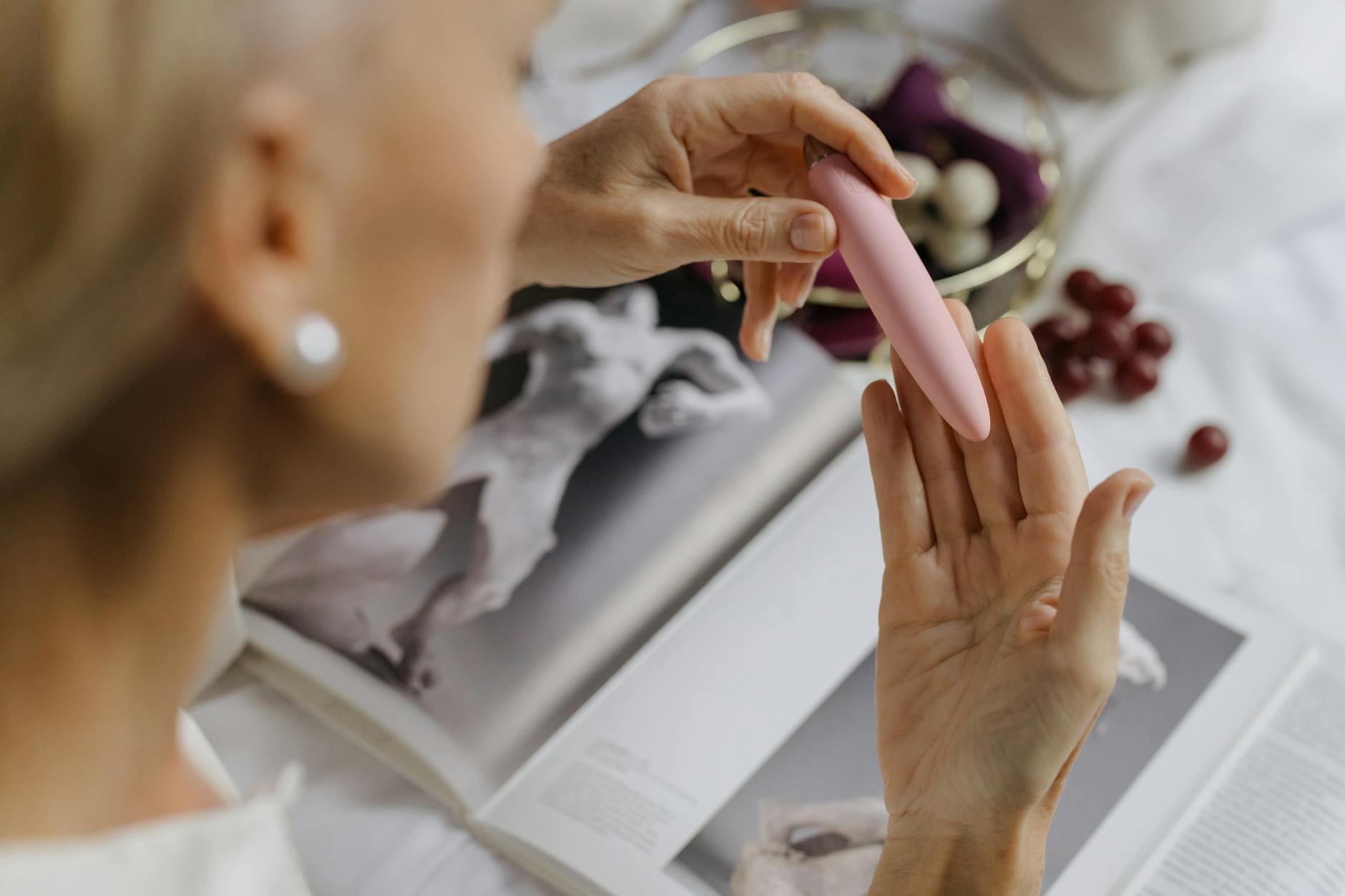
Let's be real about hormonal therapy and sensation
Hormonal therapy changes what sex feels like. Not in a "everything stops working" way, but in a "your body is rewiring itself, and that takes adjustment" way. Whether you're on testosterone therapy, estrogen suppression, or something else entirely, the tissues in your vulva respond differently. Nerve endings that used to fire at a whisper now need a nudge. Lubrication behaves differently. Orgasms feel reshaped. And nobody really talks about it until you're three months in wondering if pleasure is coming back at all.
Here's what I tell my clients: it does come back. But the pathway looks different than it did before.
What hormonal therapy actually does to sensation
Your vulva is hormone-responsive tissue. Estrogen, testosterone, and progesterone all affect blood flow, tissue thickness, nerve sensitivity, and lubrication. When hormonal therapy changes your levels (whether that's adding testosterone, suppressing estrogen, or adjusting progesterone), those tissues respond. Sometimes immediately, sometimes over weeks.
The physical changes are real:
- Blood flow to the clitoris slows or speeds depending on what's changing
- Tissue thins or thickens, altering how directly stimulation feels
- Lubrication patterns shift, sometimes dramatically
- Nerve sensitivity adjusts, which can make direct touch feel too intense, too dull, or weirdly uneven
But here's what doesn't change: the clitoral nerve structure itself, the neural pathways in your brain, or your capacity for pleasure. The sensation is still there. You're just learning to access it through a slightly different door.
Why direct vibration gets frustrating after hormonal shifts
Tradditional vibrators buzz directly against tissue. That works beautifully when tissue thickness, lubrication, and nerve sensitivity are stable. But after hormonal therapy, direct pressure can feel either numb or uncomfortably intense, sometimes both in the same session.
This is where a lot of people get stuck. They assume pleasure has vanished. Actually, the old technique just isn't landing right anymore.
Lemon vibrators work differently. The Lem uses gentle suction instead of direct buzzing. Suction pulls tissue into the opening of the device and stimulates the entire nerve bundle without the friction component. For people whose tissues are adjusting to hormonal changes, this is often the sweet spot. It's intense enough to register clearly, gentle enough to avoid the numbness or rawness that direct vibration can trigger.
The timeline for sensation to stabilize
If you're early in hormonal therapy, here's what I usually tell my clients to expect:
Weeks 1-4: Sensation is chaotic. Arousal might disappear entirely or feel weird and scattered. Some people describe it as "numb but twitchy." That's normal. Your nervous system is recalibrating.
Weeks 4-8: You'll start noticing patterns. Maybe your clitoris feels most responsive in the mornings. Maybe you need longer warm-up time. Maybe intensity level 1 on the Lem suddenly feels right when level 3 felt overwhelming last week. That's not backsliding. That's calibration.
Weeks 8-16: Most people feel significant stabilization. Sensation isn't necessarily back to baseline, but it's consistent enough that you can start figuring out what works for your new body.
Month 4+: For many, this is when the richer stuff happens. Once arousal stabilizes, people often report discovering that their orgasms feel different. Sometimes that's better. Sometimes it's just different and equally satisfying once you stop comparing it to before.
If you're past month 4 and sensation still feels absent or painful, talk to your prescribing doctor. That's not normal, and dosage, timing, or additional support might help.
Why texture matters more during hormonal adjustment
When tissue sensitivity is changing, the difference between silicone, glass, and other materials becomes more noticeable. Silicone holds warmth differently than glass. Textured surfaces register differently on skin that's still recalibrating.
The Lem is medical-grade silicone, which feels smooth and warm to the touch. That matters because during hormonal shifts, anything textured or cold-feeling can register as irritating instead of stimulating. You want something neutral enough not to add friction but substantial enough to feel present.
Lubrication also changes its job during this phase. You might need more than you used to, even if natural lubrication is still happening. That's not a sign of arousal failure. It's actually a sign that your tissues are protecting themselves during adjustment. Work with that, not against it.
How to ease back into pleasure with lemon vibrators
Start stupidly gentle. I mean lower than you think you need. Most people who are adjusting from hormonal therapy do best starting at pattern 1 or 2 on the Lem, even if they've used high-intensity devices before. You can always go up. You can't un-irritate tissue.
Budget extra time for warm-up. After hormonal therapy, arousal often takes 20-30 minutes to build fully instead of 5-10. That's not low libido. That's your system being cautious, which is actually smart. Honor that timeline. Your body knows what it needs.
Pay attention to when you feel most responsive. Some people find that sensation is clearest in the morning, before cortisol peaks. Others discover that late afternoon, after their body has adjusted to whatever dose they're taking that day, is peak. Track it for a week or two. You'll find a pattern.
Use water-based lubricant even if you're producing natural lubrication. During hormonal shifts, adding a bit of external lubrication actually reduces friction without reducing sensation. It's like wearing glasses to read. You're getting clearer, not less.
What's normal and what's worth talking to a doctor about
Normal sensations during hormonal adjustment: numbness that comes and goes, intensity that feels unpredictable from day to day, needing much longer warm-up time, orgasms that feel flatter or more concentrated than before, difficulty with arousal that gradually improves over weeks.
Worth mentioning to your prescribing doctor: persistent pain, tissue changes that look unusual (discoloration, unusual texture, sores), sensation that's worsening at week 12 instead of improving, or complete arousal loss that's accompanied by other concerning symptoms.
Your doctor needs to know you're exploring this. Not because there's shame in it, but because sexual function is part of overall health. If something is off, they might adjust dosage, timing, or suggest additional support like topical treatments.
The thing nobody tells you about sensation after hormonal therapy
Most of my clients, about month 6 in, report that their new sensation is actually richer than what they remember from before. Not more intense necessarily, but more nuanced. They can feel distinction between different patterns. Orgasms have texture. They're not comparing to the past anymore. They're living in what's actually happening.
That doesn't happen overnight. It requires patience, experimentation, and tools that work with your body instead of against it. Lemon vibrators, with their gentle suction mechanism, turn out to be exactly what tissue needs when it's learning to respond to hormones in a new way.
Your sensation isn't gone. It's just relearning how to speak.
People Also Ask
How long does it take for sensation to return after hormonal therapy starts?
Most people see consistent improvement between 8-16 weeks, though some notice changes within the first 4 weeks. Complete stabilization often takes 3-6 months. If sensation is worsening at week 12 instead of improving, talk to your doctor. Every body is different, and dosage adjustments sometimes help.
Can you use a regular vibrator during hormonal therapy, or do you need a special one?
You can use any vibrator, but many people find that lemon vibrators work better during hormone adjustment because they use suction instead of direct buzzing. Suction is gentler on tissue that's still recalibrating and often avoids the numbness or rawness that direct vibration can trigger. It's not a requirement, just what works for most people going through this.
Is it normal to feel numbness and then hypersensitivity in the same session during hormonal therapy?
Completely normal. Your nervous system is adjusting, and hormone levels fluctuate throughout the day. You might feel intense at 9 a.m. and numb by evening. Keep a simple log for a week. You'll probably spot a pattern. That pattern helps you time exploration for when your body feels most receptive.
Should you use lubrication if you're producing natural lubrication during hormonal therapy?
Yes. Adding external lubrication during hormonal adjustment reduces friction without reducing sensation. Think of it like wearing glasses to read. You're getting clearer signal, not less sensation. Water-based lube is your safest bet since it doesn't degrade silicone toys like oil-based lubes do.
What if you're on hormonal therapy and your partner wants to explore together?
Start the conversation early and separate it from sex. Say something like: "My body is adjusting to this medication, and sensation feels different right now. Let's explore together without pressure, and I'll tell you what actually feels good." The Lem works beautifully for partnered exploration because your partner can control it and you can focus on what you're feeling. Take your time. This is a journey, not a destination.
Can lemon vibrators help if you've been on hormonal therapy for years and sensation is still weird?
Yes, but if sensation is weird after you've stabilized on hormones (usually past 6 months), it might not be the vibrator. Talk to your doctor about whether dosage adjustment, additional support like topical treatments, or other factors might help. Sensation can stabilize beautifully once you find the right support.
What comes next
Restoring pleasure after hormonal therapy is not about going backward to what used to work. It's about meeting your body where it actually is right now and finding the tools that make sense for that body. Lemon vibrators, with their thoughtful design and gentle approach, happen to be exactly what tissue needs when it's relearning how to respond.
Your sensation isn't broken. It's just remapping. And with patience, the right tool, and good information, that map often leads somewhere even better than before.
If you're working through this and want to talk through specifics, we're here. Get in touch at the link below.
References
- Stuenkel, C. A., et al. (2015). The Endocrine Society Clinical Practice Guideline for menopausal hormone therapy. Journal of Clinical Endocrinology & Metabolism, 100(9), 3341-3366.
- Kingsberg, S. A., Rezaee, R. L. (2013). Hypoactive sexual desire disorder in women: Restoration of the orgasm. Fertility and Sterility, 100(3), 612-619.
- Worsley, R., Bell, R. J., Gartoulla, P., Davis, S. R. (2012). Prevalence and predictors of low sexual desire, sexually related personal distress, and hypoactive sexual desire dysfunction in a community-based sample of midlife women. Journal of Sexual Medicine, 9(4), 1123-1133.