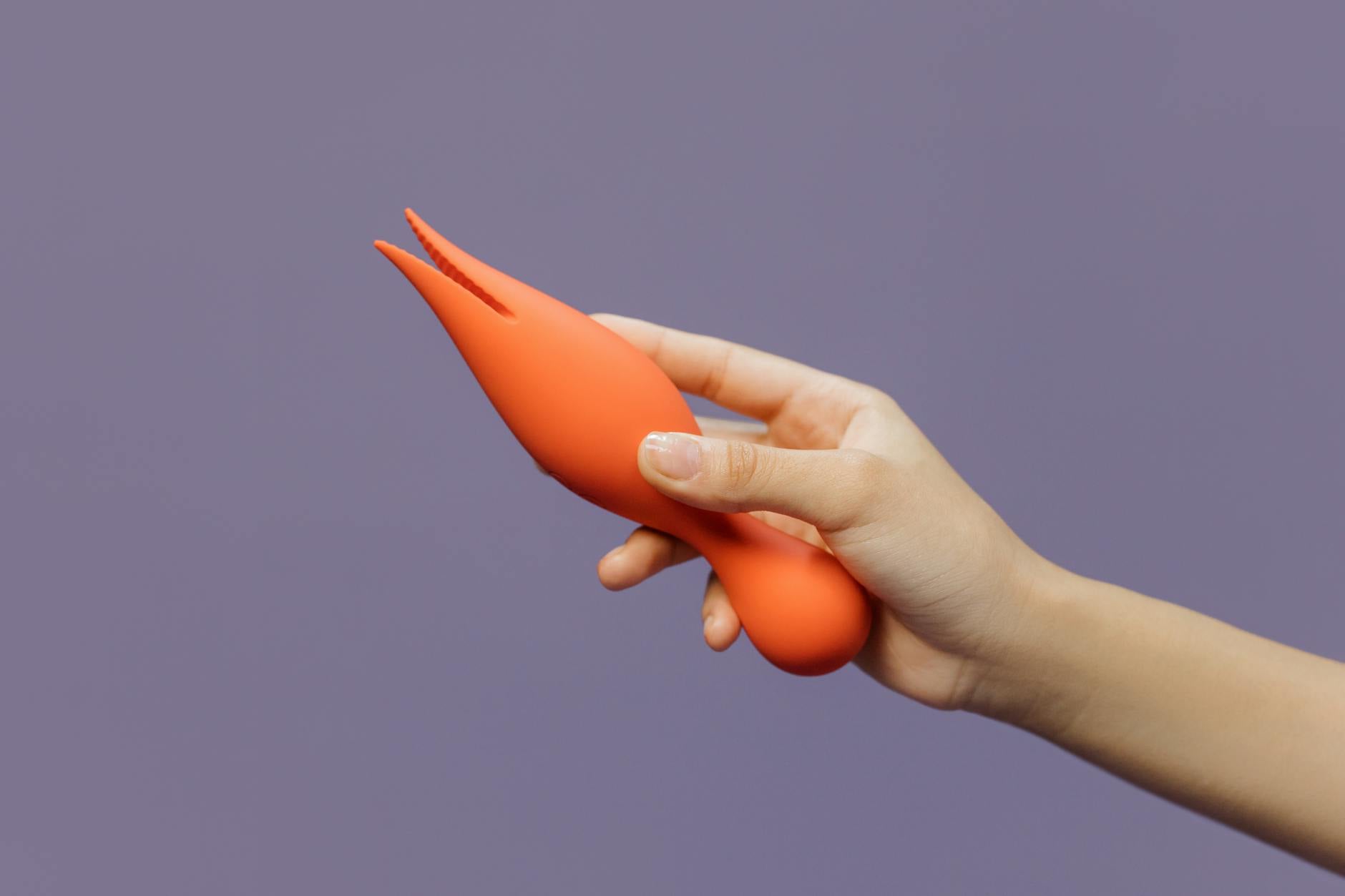
Let's talk about what actually changes
Menopause rewires pleasure. Not in the "everything stops working" way you've probably heard, but in specific, mechanical ways that matter when you're choosing toys. Estrogen drops. Tissue thins. Blood flow to the vulva becomes slower to activate. And here's the part nobody explains: the type of stimulation that worked beautifully for decades can suddenly feel too intense, too numb, or just plain uncomfortable.
This isn't a personal failure. It's biology. And it matters for how you pick a vibrator.
How tissue changes affect vibration versus suction
Traditional vibrators work by repetitive friction. They move back and forth, side to side, or in small circles against delicate tissue. This works great when estrogen keeps tissue thick, elastic, and resilient. But after menopause, tissue becomes thinner and more fragile. Direct vibration on thinner tissue can feel sharp, almost painful, rather than pleasurable. Some people describe it as "too much" or "almost numb at the same time," which sounds impossible but happens regularly.
Lemon vibrators use suction instead. They create a gentle vacuum that stimulates the clitoris without direct friction. The suction pulls tissue into the device and stimulates nerve clusters in a different way. For menopausal bodies, this is often more comfortable and more effective. The stimulation feels broader, less localized, and it doesn't require tissue to be thick or highly elastic to feel good.
Why suction is gentler on menopausal tissue
Think of it this way: friction-based vibrators demand something from your body. They need tissue that can absorb and respond to repeated micro-movements. Suction-based tools like the Lem work with your body as it is now. They create sensation through pressure change rather than mechanical movement across the surface.
For someone in or past menopause, this shift matters. Suction stimulates different nerve pathways. It distributes stimulation across a wider area instead of concentrating it on a single point. Many clients I work with find that sensation feels almost easier to access with suction. Less warm-up time needed. Fewer adjustments required. The pleasure builds differently, often more gradually and more sustainably.
The arousal timeline advantage
Menopause slows arousal. What used to take five minutes now takes fifteen or twenty. A lot of people assume this means adding more intense stimulation. Usually it means the opposite. Slower build, gentler start, longer pathway.
Traditional vibrators often come preset to higher intensities. Starting at a baseline that already feels too strong creates a problem. You end up frustrated before you even get properly aroused. With lemon vibrators, most models start at lower suction levels. You control the pace. You're meeting your body where it is, not forcing it to catch up to preset settings.
Lubrication works differently with these designs
Vaginal dryness during menopause is real, and water-based lubricant becomes a regular part of the picture. With friction-based vibrators, lubricant creates a second problem: it breaks down quickly under the repeated abrasion of traditional vibration. You end up reapplying every few minutes, which breaks the whole mood.
Suction-based designs actually work better with lubrication. The lube creates a better seal between the device and tissue, which makes the suction more effective and more comfortable. It doesn't deteriorate under the same kind of mechanical stress. This matters more than it sounds. It's the difference between having to interrupt yourself constantly versus having a stable, sustainable experience.
The sensitivity question
Some menopausal people report that their clitoris feels less sensitive. Others report hypersensitivity. Both are normal. Both happen because nerve sensitivity is changing alongside tissue change.
If you're in the less-sensitive camp, traditional vibrators often push you toward higher intensities, which can feel numbing and overwhelming. Lemon vibrators let you modulate without jumping to extreme settings. The suction creates a different kind of stimulation that many people find more accessible when sensitivity is low.
If you're hypersensitive, direct vibration can feel painful quickly. Suction distributes that intensity differently, usually making it more tolerable. You're not getting ground against. You're being gently pulled, which feels different enough that it often works for both ends of the sensitivity spectrum.
Partnered experience shifts
Menopause also changes what partnered sex feels like, and the devices you choose matter here too. Traditional vibrators often create more noise, more obvious buzzing, more of a clinical feeling. For couples navigating changes in desire, responsiveness, and comfort, that can feel isolating.
Lem vibrators and similar suction-based tools are often quieter, and they feel more intimate to many people. The sensation is less mechanical-seeming. Partners often report that using these tools together feels more like genuine connection than adding an obvious sex toy to the mix. This psychological piece matters as much as the physical one.
Recovery and sensation over time
Here's something clinical but important: menopausal tissue is still capable of recovery and increased blood flow with consistent stimulation. This doesn't mean your body "bounces back to how it was." It means that regular, comfortable stimulation actually helps maintain better tissue health than avoidance does.
With traditional vibrators, the discomfort or numbness often leads people to avoid pleasure altogether. With lemon vibrators, the improved comfort means more consistent use, which actually helps maintain tissue health and sensation capacity. Over weeks and months, many people find their arousal timeline shortens a bit and sensation deepens. Not back to thirty, but better than month one of trying to use the wrong tool.
When to consider making the switch
You might benefit from trying a lemon vibrator if you've noticed any of this: traditional vibrators feel too intense, too numb, not intense enough at higher settings, or require constant lubrication reapplication. If arousal feels slower and you're frustrated by preset intensity levels. If you've stepped back from solo or partnered pleasure because the physical experience stopped matching what used to work.
You don't need to replace everything you own immediately. But if your first, go-to toy isn't delivering anymore, this is worth trying. Suction-based technology like the Lem is specifically designed with tissue sensitivity in mind, and many menopausal bodies find it more intuitive than traditional vibration.
The bigger picture
Menopause is when a lot of people finally get permission to invest in their own pleasure properly. No fertility concerns. No obligations. No performing for anyone else. The tools you choose matter because they're part of reclaiming that experience on your own terms.
Tradition vibrational toys aren't wrong. They're just built for bodies with different hormonal environments. As you move into or through menopause, choosing tools designed for how your body actually works now is one of the smartest things you can do. It's not accepting decline. It's choosing something better.
Common questions about menopause and suction toys
Do lemon vibrators require more maintenance than traditional vibrators?
No. Lemon vibrators are similarly simple to clean. Use warm water and mild soap, pat dry, store in a cool place. If anything, the design is often more straightforward than multispeed traditional vibrators. Less electronic complexity means less that can malfunction.
Can I use my lemon vibrator with a partner during menopause?
Absolutely. Many couples find suction-based tools feel more intimate than traditional vibrators during this transition. The quieter operation, less clinical feel, and adjustable intensity make it easier to incorporate into partnered pleasure without it feeling like "adding a device." Some partners use it on each other. Some use it during intercourse. The flexibility is actually one of the advantages.
Does hormone replacement therapy change which toys work better?
Yes, often. If you start hormone therapy, tissue thickness and blood flow typically improve within weeks. This might mean traditional vibrators become comfortable again, or you might find you prefer the suction design for other reasons. The point is to pay attention to what's actually working, not stick with one tool out of habit.
How long does it take to notice a difference switching to a lemon vibrator?
Most people notice within the first few uses. If the issue was intensity being too much or tissue sensitivity, the difference is usually immediate. If arousal timing was the problem, you might notice it takes slightly less warm-up time after a few sessions. Comfort improving over weeks as you use consistently is also normal.
Are lemon vibrators more expensive than traditional vibrators?
Pricing is comparable. Entry-level lemon clitoral vibrators like the Lem start around the same price as quality traditional vibrators. You're not paying more for technology. You're getting different technology designed for menopausal bodies specifically, which is honestly worth the investment if traditional toys stopped working.
What if I try a lemon vibrator and it doesn't feel right?
Not every design works for every body. Some people prefer traditional vibration even during menopause. Some find they want a combination of both. The data is clear that suction works better for many menopausal bodies, but "many" isn't "all." If it doesn't click, you've tried something. That information matters too.
The takeaway
Menopause changes what works. That's not weakness. It's information. Your body is telling you something about its current needs, and choosing tools designed for those needs is just common sense. If traditional vibrators stopped delivering during this transition, a suction-based lemon vibrator might be the click-into-place solution you've been looking for. Worth trying. Probably worth investing in.
If you're navigating menopause and pleasure feels complicated, that's completely normal. Consider reaching out to discuss what's actually happening with your body and what might help. We're here to talk through it.